


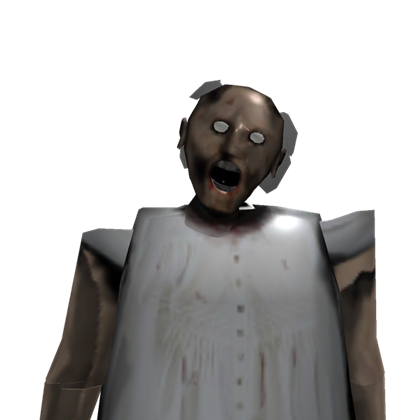






Game description:
Button Prison is a first-person puzzle game built around restriction, observation, and consequence-driven interaction. The player begins confined to a single room with no clear explanation or instructions. Movement is limited, and progression depends entirely on interacting with buttons placed throughout the environment. Each action alters the room in some way, forcing the player to rely on memory and logic rather than guidance. The experience centers on understanding how the space reacts over time.
Setting and Initial Conditions
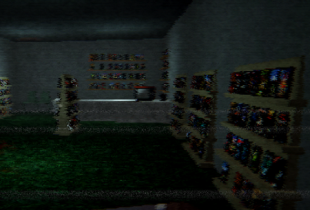
The game opens in an enclosed room containing minimal furniture, unfamiliar objects, and numerous buttons embedded into walls or attached to items. There are no tutorials or objective markers, leaving the player to infer purpose through experimentation. The environment appears static at first, but changes gradually as interactions accumulate. The lack of narrative exposition shifts focus entirely onto the room itself as the primary system to be understood.
Button-Based Interaction System
All progression in Button Prison is driven by pressing buttons. Each button triggers a specific response, though results are not always immediate or beneficial. Some actions unlock new elements, while others complicate the environment or reverse earlier progress. The challenge lies in recognizing patterns and recalling outcomes from previous presses. Key interaction mechanics include:
· pressing buttons to trigger environmental changes
· observing delayed or indirect reactions
· collecting items revealed through interaction
· remembering which buttons produce useful results
· avoiding repeated actions that create setbacks
These mechanics form a closed loop where experimentation must be balanced with caution.
Environmental Logic and Feedback
The room reacts dynamically to player input. Objects may appear, disappear, move, or change state depending on the sequence of actions taken. Visual and auditory cues act as the primary feedback system, signaling whether an interaction has altered the environment meaningfully. There are no explicit failure screens; instead, incorrect actions lead to more complex conditions that require additional problem-solving. This design encourages careful tracking of cause and effect.
Puzzle Structure and Progression
Button Prison does not use traditional levels or checkpoints. Progression is continuous and tied to understanding the environment as a whole rather than solving isolated puzzles. Players often need to revisit earlier buttons with new context, applying knowledge gained later to reinterpret earlier interactions. This layered structure rewards attention and reinforces the importance of memory over speed or reflex.



Comments