








Game description:
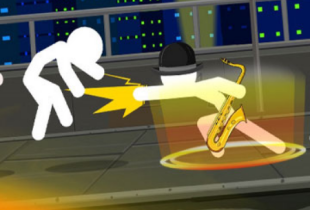
Gore in Crayon is a side-scrolling action game built around contrast between simple visuals and aggressive gameplay systems. The player controls a character in a 2D environment where the main objective is to survive waves of enemies and move through levels filled with hazards. The visual style uses hand-drawn elements that resemble crayon sketches, while the mechanics focus on direct combat and fast reactions. The game does not rely on a complex narrative and instead centers on continuous action.
Combat Flow and Player Control
The gameplay loop is based on movement, aiming, and eliminating enemies as they appear. The player navigates horizontal spaces, using weapons to deal with threats that approach from different directions. Combat requires maintaining distance, reacting to enemy patterns, and managing positioning within limited space. Attacks are immediate, and enemies respond quickly, which creates a constant need for adjustment during encounters. There is no pause in action, and survival depends on maintaining control under pressure.
Visual Style as Gameplay Context
The crayon-like presentation is not only a stylistic choice but also affects readability. Enemies, projectiles, and environmental elements are simplified, which makes recognition and reaction speed important. Backgrounds remain minimal, keeping attention on active threats. The contrast between the drawing style and the intensity of gameplay creates a clear visual structure where all important elements remain visible during combat.
The game includes several core elements that define how each session plays out:
Side-scrolling movement with limited vertical space
Continuous enemy waves without long breaks
Simple weapon system focused on direct damage
Minimal interface with focus on on-screen action
Restart-based structure after failure
These elements work together to create a loop where players repeatedly engage, fail, and retry with improved timing and awareness.
Level Structure and Session Design
Levels are structured as contained sequences where difficulty increases through enemy density and movement complexity. There are no large environments to explore, and progression is linear within each session. The design encourages short play sessions, as failure leads to immediate restart. This structure supports repeated attempts and focuses attention on mastering the core mechanics rather than navigating a broader game world.







Comments