









Game description:
Project: GLUTT is a side-scrolling action platform game built around exploration, movement, and system-based progression. The player controls a single character navigating a closed science-fiction environment composed of corridors, vertical shafts, and hostile zones. Advancement is not strictly linear, as access to new areas depends on how the player interacts with enemies and the environment. The game emphasizes learning spatial layouts and understanding how mechanics alter the character’s state over time.
World Layout and Exploration Logic
The game world is structured as an interconnected network of areas rather than isolated stages. Movement through these spaces requires careful timing, positioning, and awareness of enemy placement. Some paths are immediately accessible, while others remain blocked until specific conditions are met. Backtracking is a core part of progression, as newly gained abilities or altered character states allow access to previously unreachable routes. Exploration rewards observation and memory rather than speed.
Core Systems and Player Interaction
Project: GLUTT centers its gameplay around interaction choices that affect both combat and traversal. Enemies are obstacles and resources that influence progression. The player must decide when to avoid threats and when to engage with them directly. Key gameplay systems include:
· platforming across horizontal and vertical spaces
· enemy encounters that can be avoided or confronted
· consumption mechanics that alter character size or abilities
· non-linear progression through interconnected zones
· revisiting earlier areas with changed capabilities
These systems form a loop where exploration, combat, and character state continuously affect one another.
Combat, Risk, and Adaptation
Combat is situational rather than constant, requiring the player to adapt based on environment and enemy behavior. Direct confrontation can simplify movement through an area but may introduce new constraints depending on the outcome. The consumption mechanic creates a trade-off, as gaining strength or access may reduce agility or limit navigation options. This balance forces players to evaluate short-term gains against long-term mobility.
Visual Structure and Feedback
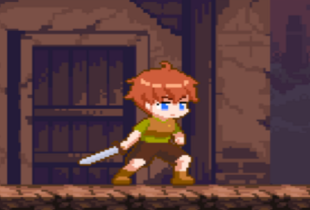
The game uses a consistent 2D visual presentation that prioritizes clarity of space and interaction. Environments are designed to communicate function through layout rather than explicit markers. Enemy behavior, environmental hazards, and traversal paths are readable through animation and positioning. Feedback is integrated into movement and interaction outcomes instead of relying on interface prompts.
Progress in Project: GLUTT is defined by understanding systems rather than completing objectives in a fixed order. The game encourages experimentation, learning from failed attempts, and reassessing earlier decisions. By combining exploration, adaptive combat, and state-based progression, it creates an experience where player choices directly shape how the world is accessed and navigated.






Comments