


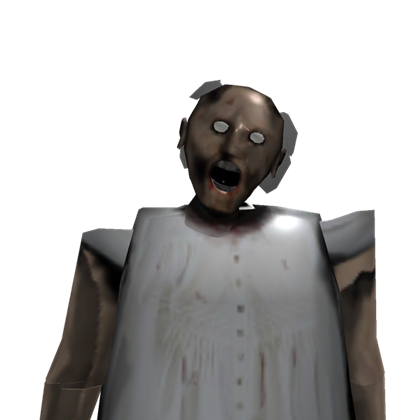






Game description:
The Not-Deer Stew is a short-form game built around a single objective that must be completed within a confined setting. The player is placed in a remote forest during winter and begins inside a small cabin equipped with cooking tools and a written recipe. To complete the task, ingredients must be gathered from outside and prepared in a specific order. The game does not rely on long explanations, instead allowing the player to understand mechanics through direct interaction and repetition.
Spatial Design and Movement
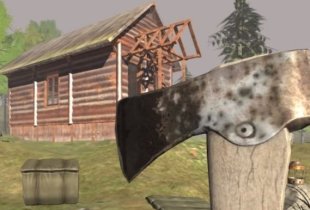
The game space is divided into two primary areas: the cabin and the forest. The cabin functions as a controlled environment where preparation takes place, while the forest introduces uncertainty. Movement between these spaces is frequent and necessary, as ingredients are located at fixed points outside. There are no fast-travel systems or shortcuts, which means each decision to leave the cabin has consequences. Time spent outdoors increases exposure to potential disruption, encouraging players to plan routes and actions carefully.
The structure of the environment remains consistent between sessions, but outcomes vary based on player behavior. This consistency allows learning through memory rather than trial-based randomness. As players become familiar with distances and locations, efficiency improves, but risk remains present throughout the session.
Gameplay Loop and Systems
The Not-Deer Stew relies on a small number of systems that repeat across each attempt. These systems interact closely and shape the overall experience:
· Identifying required ingredients from the recipe
· Traveling into the forest to collect items
· Transporting ingredients back to the cabin
· Adding items to the stew in sequence
· Responding to environmental cues
These actions form a loop that emphasizes order and timing. Errors reset progress, reinforcing attention to sequence rather than experimentation with mechanics.
Role of the Not-Deer
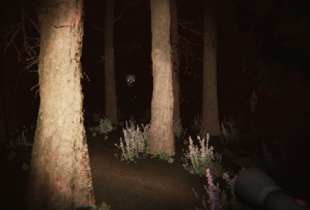
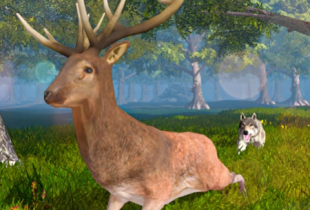
The Not-Deer functions as a disruptive element rather than a clearly defined opponent. Its behavior is not fully explained, which requires the player to interpret indirect signals such as sound and movement. This uncertainty affects decision-making and introduces pressure during routine tasks. The lack of direct confrontation mechanics places emphasis on avoidance and awareness instead of combat or scoring.
Audio and Visual Communication
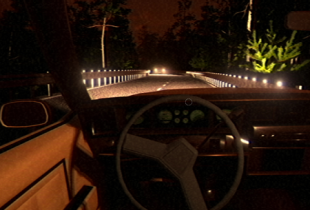
Visual presentation is minimal and functional, using simple geometry and lighting to establish space. Snow and terrain features guide navigation without explicit markers. Sound design plays a key role, providing information about nearby activity and changes in the environment. Music is limited and does not interfere with gameplay signals, ensuring that audio cues remain readable.


Comments