









Game description:
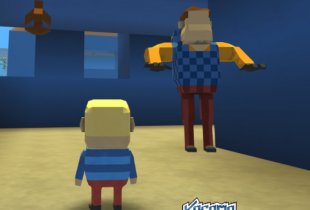
Hello Neighbor is a stealth horror game where the player investigates a suspicious neighbor by entering his house and uncovering hidden secrets. The story follows a boy who notices unusual behavior and attempts to access the basement, which is heavily secured. The game combines exploration with puzzle-solving while maintaining constant risk of being detected. The main goal is to reach restricted areas without being caught.
Core Gameplay Mechanics
The gameplay is based on stealth and environmental interaction. The player explores a large, open house filled with locked doors, hidden passages, and interactive objects. Items such as keys, tools, and devices are required to progress. Movement must be controlled carefully, as noise can attract the neighbor.
A key feature is the adaptive AI system. The neighbor observes player behavior and changes his strategy accordingly. If the player repeatedly uses the same route, the game introduces traps or obstacles in that area. This forces variation in movement and planning.
Puzzle And Interaction System
Progress depends on solving interconnected puzzles using objects found in the environment.
Keys unlock doors and restricted areas
Tools open shortcuts or remove obstacles
Objects can be thrown to distract the neighbor
Devices like cameras or alarms affect movement
Hidden switches reveal new paths
Each puzzle is part of a larger structure that gradually opens access to the basement.
AI Behavior And Difficulty
The neighbor acts as the central threat throughout the game. He patrols the house, reacts to sounds, and actively searches for the player. If detected, he chases the player and resets progress upon capture.
The AI system tracks previous attempts. It may place traps near windows, install cameras in frequently used routes, or block shortcuts. This creates a system where repeated strategies become less effective over time.
Structure And Replayability
Hello Neighbor is divided into multiple acts, each expanding the environment and increasing puzzle complexity. The house evolves into a larger and more complex structure, requiring more advanced navigation and planning.
Replayability is based on experimentation and adaptation. Different approaches can be used to solve puzzles or access areas. The combination of adaptive AI and open-ended exploration ensures that each attempt differs slightly. Progress depends on learning patterns, improving movement efficiency, and adjusting strategies to overcome the changing behavior of the neighbor.










Comments