








Game description:
Omega Flowey Simulator is a fan-created action game based on a well-known boss battle concept from the Undertale universe. Instead of presenting a long story or multiple locations, the game focuses entirely on a single encounter with the character Omega Flowey. During the fight, the player controls a small heart symbol that represents the character’s soul. The objective is to survive waves of attacks launched by the boss while avoiding damage for as long as possible. Success depends on quick reactions and understanding how each attack pattern works.
Boss Battle Concept
The central idea of Omega Flowey Simulator comes from the transformation of Flowey into a more powerful form. In this state, the character uses a variety of unusual attacks and environmental effects during the confrontation. The simulator recreates this encounter as a standalone experience where the entire gameplay revolves around surviving the boss.
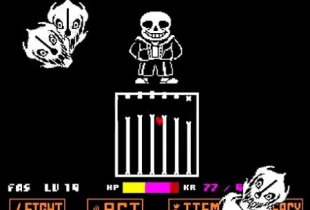
Instead of exploring levels or collecting items, the player immediately enters the battle arena. The screen fills with different projectiles and hazards that must be avoided. Each sequence introduces a new pattern that requires careful movement and timing.
Movement And Survival Mechanics
The gameplay in Omega Flowey Simulator is simple in terms of controls but demanding in terms of reaction speed. Players guide the heart symbol around the screen while avoiding objects launched by the boss.
Typical gameplay elements include:
· moving the heart icon across the arena
· dodging projectiles and environmental hazards
· reacting to different attack phases
· learning patterns used by the boss
· restarting attempts after taking damage
These mechanics create a gameplay loop focused on observation and repeated attempts to improve performance.
Increasing Difficulty During The Fight
As the encounter progresses, the attack patterns become more complex. Early phases may include slower projectiles that allow players to learn the basic mechanics. Later phases introduce faster movements and larger numbers of hazards that appear simultaneously.
The design encourages players to recognize patterns and anticipate incoming attacks. With practice, players can predict how certain sequences behave and adjust their movement accordingly. This learning process becomes essential for surviving the later stages of the battle.






Comments