








Game description:
Asriel Fight Simulator is a combat-based experience that recreates the final battle structure from a well-known role-playing game framework. The player controls a small avatar positioned within a confined space while facing continuous attack sequences. Each encounter is presented as a test of pattern recognition, timing, and movement precision. The simulator removes narrative layers and focuses only on the mechanical core of the fight, making it a direct exercise in survival and reaction under pressure.
Combat System
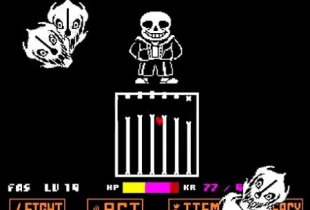
The gameplay in Asriel Fight Simulator follows a pattern-driven loop where attacks occur in fixed intervals and must be avoided through movement. The player cannot attack freely; instead, success depends on reading visual cues and maintaining control within restricted boundaries. The structure emphasizes efficiency over aggression. Core mechanics include:
· Reading incoming patterns and predicting attack direction.
· Moving within a limited box to avoid contact damage.
· Managing recovery items or shields if the mode allows.
· Tracking health and survival time as progress indicators.
The system creates an environment where precision and adaptation replace chance.
Visual and Audio Elements
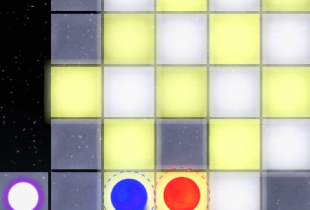
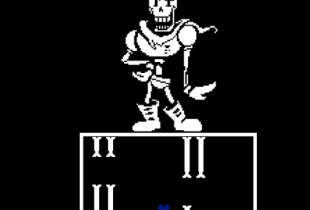
The presentation of Asriel Fight Simulator mirrors the layout of its source design. The visual field stays minimal, showing the player’s position, projectiles, and health indicators. Bright contrasting colors distinguish attack types, making them identifiable through shape and motion. The soundtrack loops according to attack phases, signaling tempo changes that help predict the next sequence. Audio cues act as both warning and rhythm, guiding player response without overloading the screen with information.
Progress and Difficulty
Difficulty increases through layered attack sequences that combine projectiles, beams, and timed hazards. Each round adds new movement constraints or changes projectile speed. Players can repeat sessions to memorize attack orders and improve response consistency. The simulator records survival duration and accuracy, encouraging refinement through repetition. Over time, the game becomes an iterative process of learning movement routes and reacting to predictable but demanding patterns.
Asriel Fight Simulator functions as a focused model of encounter design. It removes story context to expose the structure of timing, spacing, and recognition that define this type of combat. The absence of randomness ensures that improvement is measurable and skill-based. By concentrating on one confrontation and eliminating external variables, the simulator demonstrates how controlled repetition and feedback can represent both challenge and mastery within a limited frame.







Comments