









Game description:
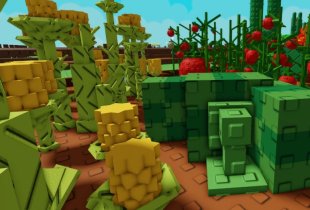
The Farmer Was Replaced centers on the idea of running a farm through automated systems controlled by player-written code. Instead of performing tasks manually, the player programs a drone that moves through fields, plants crops, gathers resources, and manages production cycles. The main objective is to build reliable routines that keep the farm operational without direct intervention. This creates a structure that blends planning, testing, and continuous improvement.
Early Gameplay And Learning The Basics
At the start, the player receives a small farm area and a basic drone capable of simple tasks. The available commands include movement, harvesting, and the placement of seeds. Early progress is tied to experimenting with how these commands interact with the grid. The learning process is built around understanding how to translate farm actions into code that repeats correctly over time. As the player improves, the farm gradually expands, introducing more space and more opportunities for automation.
Mid-Game Development And Player Decisions
As the playable area increases, the scripts written earlier become insufficient, and the player must reorganize them. The farm begins to require more detailed routines, with multiple tasks happening in parallel. During this phase, players typically focus on:
· Creating longer sequences that handle several actions in one run
· Designing pathing patterns that reduce unnecessary movement
· Implementing loops to repeat daily tasks automatically
· Managing timing to avoid conflicts between planting and harvesting
These mid-game actions form the structural core of long-term progress.
Advanced Logic And System Expansion
In later stages, The Farmer Was Replaced begins to challenge the player with more complex crop requirements and larger field layouts. The drone must navigate wider grids, respond to varied conditions, and carry out tasks that depend on precise sequences. This often leads to reorganizing code into functions, breaking routines into smaller parts, or adding conditional checks. The emphasis shifts from basic automation to building systems that scale smoothly with each new expansion.
Long-Term Gameplay And Replay Potential
As the farm becomes increasingly automated, the player’s role evolves into refining and upgrading their automation systems. Older code may need adjustments to keep pace with new farm mechanics, prompting repeated return to earlier scripts. The structure of the game allows the player to rebuild, test, and optimize at any stage. This gives The Farmer Was Replaced strong replay potential, as there is always room to rework logic, increase efficiency, or explore alternate approaches to the same tasks.








Comments