









Game description:
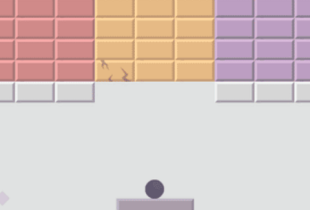
DX-Ball 2 is an arcade game that follows the brick-breaking format, where the player controls a paddle to keep a ball in motion and clear arranged blocks from the screen. Each level is completed by destroying all breakable bricks while avoiding the loss of all lives. The rules are consistent across the entire game, which allows players to focus on execution rather than learning new systems. Difficulty increases through level design and speed rather than changes to the core mechanics.
Player Control And Movement Precision
The control model in DX-Ball 2 is intentionally simple, limited to horizontal paddle movement. This simplicity places full responsibility on player precision. The angle at which the ball reflects depends on where it hits the paddle, making positioning critical. As the ball speed increases, small errors can quickly lead to losing control. The game does not assist the player with automatic corrections, so maintaining consistent movement becomes a key skill over time.
Level Layouts And Structural Variety
DX-Ball 2 organizes its content into board sets, each containing multiple levels with unique brick layouts. While the objective remains the same, each board introduces spatial challenges that require different approaches. Some layouts emphasize narrow channels that demand precise angles, while others spread bricks across wide areas, increasing the need for sustained control. The difficulty curve is steady, giving players time to adapt before introducing more restrictive designs.
At the midpoint of gameplay, players regularly encounter the following elements:
· mixed brick formations with varied durability
· indestructible blocks that redirect ball movement
· falling modifiers released from specific bricks
· multiple balls active on the screen at once
· reduced margin for error due to faster gameplay
These elements increase complexity without altering the fundamental rules.
Power-Ups And Tactical Choices
Power-ups in DX-Ball 2 appear as falling icons that the player can choose to collect or ignore. Some effects make control easier by enlarging the paddle or slowing the ball, while others introduce challenges such as reduced paddle size or increased speed. Because power-ups are optional, players must evaluate risk in real time. Catching the wrong modifier can turn a stable situation into a difficult one, especially during later levels.
Visual Readability And Sound Feedback
The visual design of DX-Ball 2 prioritizes clarity. Bricks are clearly differentiated by color and shape, allowing players to understand their behavior instantly. Backgrounds are kept minimal to avoid distraction during fast movement. Audio feedback is direct and functional, signaling collisions, brick destruction, and power-up activation. Music loops consistently and supports long play sessions without drawing attention away from gameplay.








Comments