









Game description:
OMORI is a role-playing game that combines turn-based combat with exploration and narrative-driven progression. The player controls a main character moving between two distinct settings, each with its own rules and visual style. The structure alternates between these spaces, gradually revealing connections through interactions and events. The gameplay is not focused on a single system, but instead blends combat, dialogue, and environmental exploration.
Combat System and Emotions
The battle system follows a turn-based format where characters select actions such as attacking, using skills, or interacting with team members. A central mechanic is the emotion system, where characters can be affected by emotional states that influence damage and defense. These states interact with each other in a defined way, creating advantages or disadvantages depending on the situation. Managing emotions becomes as important as selecting attacks, especially in longer encounters.
Exploration and Dual Structure
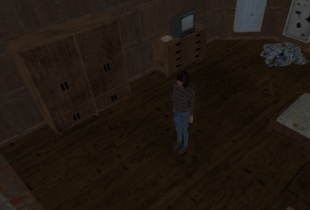
Exploration takes place across two different worlds, each offering unique locations, characters, and events. One setting focuses on structured, surreal environments with clear progression paths, while the other presents more grounded locations with interactive elements. Movement involves navigating areas, solving simple tasks, and triggering story sequences. The transition between these worlds is a key part of how the game unfolds.
The main gameplay elements can be summarized as follows:
Turn-based combat with party management
Emotion system affecting battle outcomes
Exploration across two distinct environments
Interaction with characters through dialogue
Multiple endings based on player decisions
These systems work together to create a loop that balances action and narrative progression.
Progression and Player Choice
Progression is driven by both story events and player decisions. Certain actions influence how events unfold and which paths become available. The game includes multiple endings that depend on choices made during key moments. While combat and exploration provide structure, the outcome is shaped by how the player interacts with the world and characters.
OMORI does not follow a purely linear format, as different choices can lead to alternative sequences. The pacing shifts between slower exploration and structured combat segments. The game maintains consistency in its mechanics while allowing variation through decisions and optional content. The overall experience is defined by the interaction between systems rather than a single dominant gameplay element.














Comments